Tag: Astrobiology

  • A Mission to an Ocean World: Exploring Europa From Orbit

    A Mission to an Ocean World: Exploring Europa From Orbit

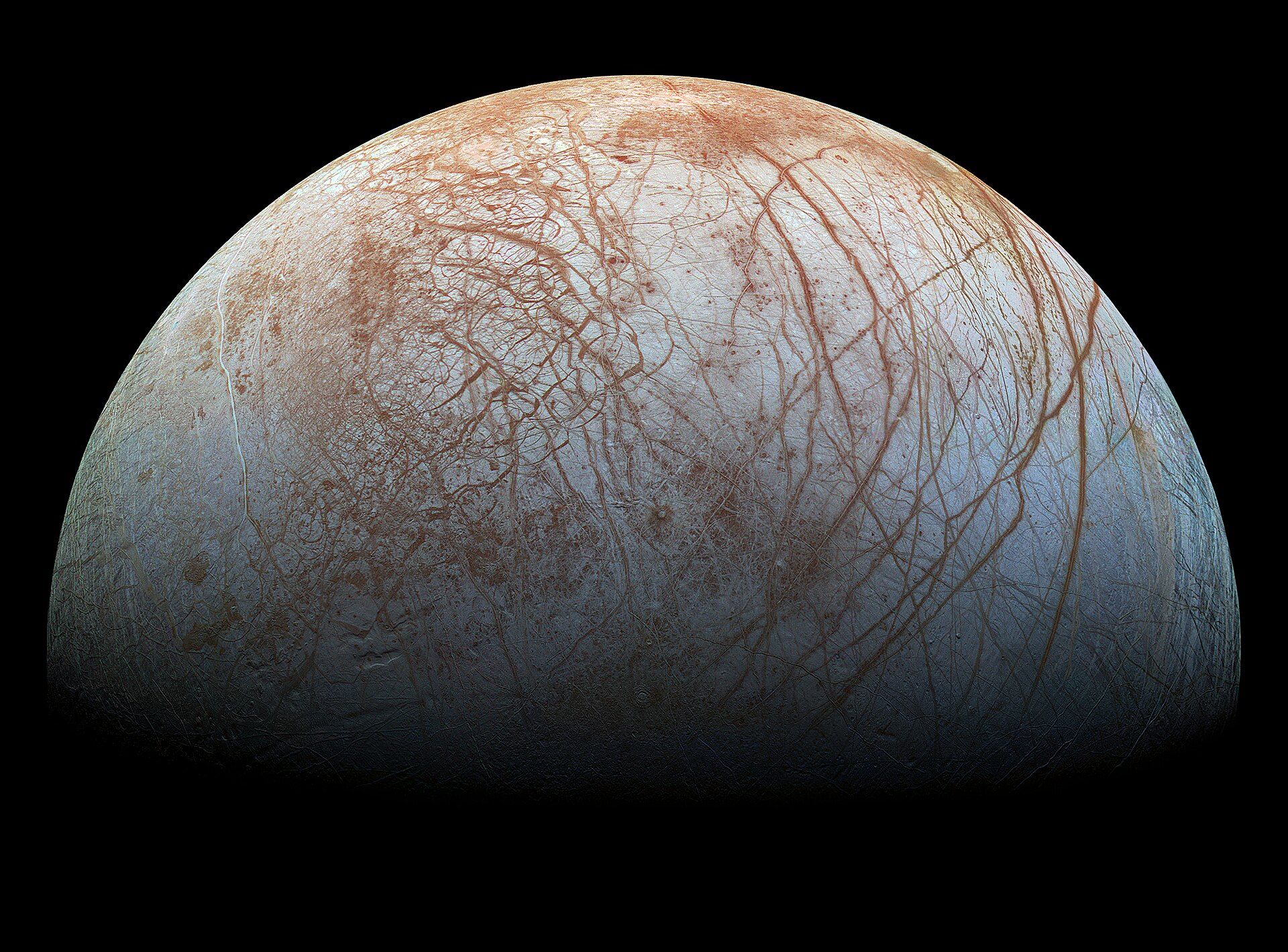
    Deciding whether Europa’s hidden ocean could support life requires more than orbital snapshots. It requires measuring the thickness of the ice, mapping the ocean beneath it, sampling whatever escapes to the surface, and doing all of it in one of the harshest radiation environments in the solar system.

    That is the job of Europa Clipper, the largest planetary spacecraft NASA has built.

    Orbiting Jupiter, not Europa

    The mission’s central design decision looks counterintuitive at first: the spacecraft will not orbit Europa. It will orbit Jupiter on a long, looping path, dipping past Europa for close flybys and then retreating.

    The reason is radiation. Jupiter’s magnetosphere accelerates charged particles to enormous energies, and Europa sits inside the worst of it. A spacecraft parked in Europa orbit would accumulate a lethal dose to its electronics in a matter of weeks. By spending most of each orbit far from Jupiter and only sprinting through the danger zone, Clipper can accumulate dozens of close passes over years rather than dying after a few.

    Even so, the most sensitive electronics are housed in a thick-walled vault of titanium and aluminium — essentially a radiation-shielded safe at the heart of the spacecraft.

    What it carries

    The instrument suite is built to answer three questions: how thick is the ice, what is the ocean like, and what is the surface made of.

    • An ice-penetrating radar designed to profile the shell and look for water pockets within it, or the boundary at its base.
    • A magnetometer to refine the induced-field measurements that first indicated a conductive ocean, tightening the constraints on its depth and salinity.
    • Mass spectrometers to sample gas and dust around the moon, including any material lofted from plumes or knocked off the surface by micrometeorites.
    • Cameras and spectrometers covering visible, ultraviolet, and infrared wavelengths to map composition and geology at high resolution.
    • A thermal imager to hunt for warm spots that might mark recent activity or thin ice.

    Notably, several of these instruments can sample Europa’s material without landing. If plumes vent from the subsurface, flying through one turns a flyby into a sampling mission.

    The spacecraft’s solar arrays span more than thirty metres — necessary because sunlight at Jupiter is roughly one twenty-fifth as strong as at Earth.

    Getting there

    Jupiter is a long way, and a direct transfer is expensive in fuel. Clipper takes an indirect route, using gravity assists to build up speed over several years before arrival. Once in the Jovian system, the orbit is gradually reshaped by repeated encounters, bringing the spacecraft over different parts of Europa on each pass so the coverage accumulates into a global map.

    The plan calls for roughly fifty close flybys, some passing within a few tens of kilometres of the surface.

    Not travelling alone

    Europa Clipper shares the Jupiter system with the European Space Agency’s JUICE mission, which launched earlier and is focused primarily on Ganymede, with flybys of Callisto and Europa along the way. Ganymede is the only moon known to generate its own internal magnetic field, and it is thought to hold a deep ocean of its own.

    Two spacecraft studying the same system with complementary instruments is a substantial upgrade over anything since Galileo, the orbiter that first made the case for Europa’s ocean in the 1990s.

    What it will not do

    It is worth being precise about the mission’s limits. Europa Clipper is not a life-detection mission. It carries no instrument capable of confirming biology, and it will not land, drill, or reach the ocean.

    Its purpose is habitability assessment: determining whether the environment has the ingredients life requires. That distinction matters, because the results will shape what gets built next. If the ice turns out to be thin in places, or plumes are confirmed as a reliable sampling route, the case for a lander becomes far stronger — and far better targeted.

    The reconnaissance has to come first.
  • The Search for Life: Inside Astrobiology’s Biggest Questions

    The Search for Life: Inside Astrobiology’s Biggest Questions

    Astrobiology has an awkward founding problem: it is a scientific field studying a subject with no confirmed examples beyond a single case. Every organism ever examined descends from a common ancestor on one planet.

    That does not make the field unserious. It makes it unusually careful about definitions.

    The questions underneath the question

    “Are we alone” decomposes into several distinct problems, and conflating them causes most of the confusion in public discussion.

    • How does non-living chemistry become living chemistry? This is the origin-of-life problem, and it is a question about Earth as much as anywhere else.
    • Given a habitable environment, how likely is life to arise? Unknown, and the single data point we have does not constrain it.
    • Given microbial life, how likely is complex multicellular life? On Earth this took billions of years, which may or may not mean it is difficult.
    • Given complex life, how likely is technology? An entirely separate question, and the one SETI addresses.

    Confirming microbial life on Mars would be one of the most significant discoveries in history and would say almost nothing about the fourth question.

    What counts as habitable

    The working definition centres on liquid water, an energy source, and the elements life needs — carbon, hydrogen, nitrogen, oxygen, phosphorus, sulphur.

    Liquid water gets the emphasis because it is an unusually good solvent, remains liquid across a wide temperature range, and participates directly in biochemistry. This may be parochial, but it is the only chemistry with a demonstrated track record.

    The classical habitable zone is the orbital band around a star where a planet with an Earth-like atmosphere could sustain surface liquid water. It is a useful screening tool and a poor final criterion, because it ignores atmospheric composition, and because it says nothing about subsurface oceans.

    That last point has reshaped the field. Europa, Enceladus, Titan, Ganymede, and possibly others hold liquid water far outside any star’s habitable zone, kept warm by tidal heating rather than sunlight. If subsurface oceans are the most common habitable environment in the universe, then habitable-zone statistics are measuring the wrong thing.

    What Earth’s extremophiles taught us

    The expansion of the habitability concept came largely from discovering how much of Earth is inhabited.

    Microbes thrive in near-boiling hydrothermal vents, in brine at temperatures well below freezing, in highly acidic mine drainage, under crushing pressure in ocean trenches, in rock kilometres below the surface, and in radiation fields that would sterilise most laboratory equipment.

    Deep-sea vent ecosystems were particularly consequential because they run on chemical energy rather than sunlight. Before their discovery, photosynthesis seemed a near-prerequisite for a substantial biosphere. It is not.

    Every time the known limits of life on Earth were tested, they turned out to be wider than assumed.

    How you would actually detect it

    Three broad strategies are in play, with different timescales and different failure modes.

    Look for it in the solar system

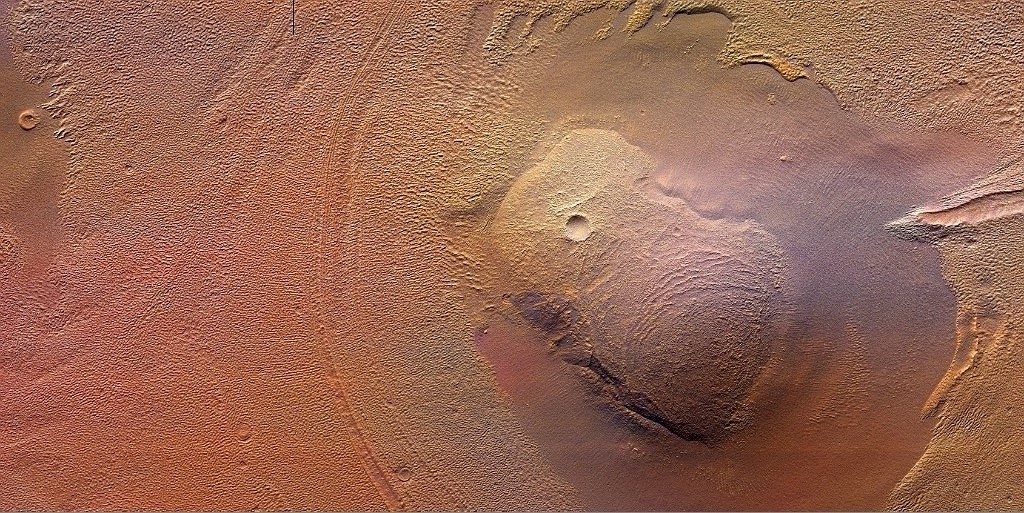
    Send instruments to Mars, to the plumes of Enceladus, to Europa, to Titan. The advantage is direct access to material. The difficulty is that detecting life is genuinely hard even with a sample in hand — distinguishing biological signatures from abiotic chemistry has tripped up serious researchers before, including in the ambiguous results of the Viking landers in the 1970s.

    Planetary protection is a real constraint here. Spacecraft are sterilised to avoid the outcome where the life detected turns out to have arrived on the probe.

    Look for atmospheric biosignatures

    An atmosphere far from chemical equilibrium suggests something is continuously replenishing it. Earth’s simultaneous oxygen and methane would be difficult to explain without biology.

    Transit spectroscopy can now measure exoplanet atmospheric composition, though for small rocky planets the signals sit at the edge of what current instruments can achieve. The interpretive problem is severe: for nearly every proposed biosignature, someone has since identified an abiotic pathway that could produce it.

    Look for technology

    SETI searches for signals — narrowband radio transmissions, optical pulses — that no natural process is known to produce. It is inexpensive relative to spacecraft and can cover enormous volumes of space, but it assumes a technological civilisation transmitting detectably during the window we happen to be listening.

    The uncomfortable silence

    The Fermi paradox is the observation that the galaxy is old, contains hundreds of billions of stars, and shows no obvious sign of anyone. Proposed resolutions range from life being rare, to intelligence being rare, to civilisations being short-lived, to our searches having covered a negligible fraction of the relevant parameter space.

    The last explanation is the most defensible and the least satisfying. The volume of signal types, frequencies, and directions searched so far is small compared to the space of possibilities.

    Astrobiology’s honest position is that we do not know, that the question is now approachable with real instruments rather than speculation alone, and that the most likely first discovery is microbial, ambiguous, and argued over for a decade.